
Month four of my last job search (Sortly), I hit a wall. The real kind of job search burnout. Not the kind where you take a weekend off and bounce back. The kind where you stop opening LinkedIn because even the logo makes your stomach drop. I had applied to 241 jobs at that point. Twelve companies had interviewed me. One hundred fifty-six had never responded at all.
The silence is what gets you. Rejection is information, at least, and a “no” closes the loop. But 156 companies vanishing into nothing after I spent hours researching teams, tailoring applications, imagining a future at their company. That’s a slow erosion of something harder to name.
I wrote about the tactics that worked in my guide on how to apply for jobs in a tough market. Boolean searches, applying within 24 hours, skipping cover letters entirely. That post covers the how. What it doesn’t cover is what the search does to you.
Job search burnout is different from job burnout. In a bad job, there’s still a paycheck, and generally a false sense of usefulness. There’s still a reason to set an alarm. But in a job search phase, none of that exists. You wake up, and the day stretches ahead with zero structure. Your inbox is either empty or full of rejections. Nobody is waiting for you to show up. Nobody even knows you exist unless you remind them.
I know both kinds. Summer 2023, I lost 70% of my eyesight from stress. My body shut down before my brain would admit anything was wrong. I got laid off from my recruiting job a few weeks later. The layoff was supposed to be the reset. It wasn’t. Applying for 241 jobs and getting rejected or ignored 229 times is its own kind of burnout. Same cortisol. Same diminishing returns. Different trigger.
The silence is what gets you OR sets your free
Here’s what nobody tells you about ghosting. It’s worse for your mental health than a flat “no.” This isn’t a feeling, there’s actual evidence behind it.
Social rejection activates the same brain regions as physical pain. The part of your brain that lights up when you stub your toe also lights up when someone rejects you. Your brain processes “we went with another candidate” the same way it processes a broken bone.1 Multiply that by months. Every non-response, every formulaic rejection email, every application that disappeared into an ATS black hole. Demoralizing is the wrong word. Your brain is absorbing hundreds of micro-injuries it isn’t built to handle.
The ghosting is worse because there’s no closure. A rejection email, however generic, closes the loop and lets you move on. Silence leaves an open stress circuit your brain keeps running: maybe they’re still reviewing, maybe I should follow up, maybe there was a glitch. One hundred fifty-six open loops, each one a tiny unresolved loss. Psychologists call this ambiguous loss: the grief of something unconfirmed.2 It’s what families of missing persons experience. Dramatic comparison, I know, but the mechanism is the same: your brain can’t resolve what it can’t confirm.
As a recruiter, I know why ghosting happens. Recruiters manage 40-plus requisitions at once. Requisitions get canceled mid-search. Hiring managers go on leave without telling anyone. Budgets get pulled. Sometimes a job posting was never attached to a real hire. It was posted to placate an overworked team or to collect resumes for a pipeline that doesn’t exist yet. I’ve been on that side of the desk. I understand how it happens. Understanding why doesn’t make the silence less corrosive.
That discrepancy is the thing I keep coming back to. The systems that cause ghosting are not personal. Most recruiters aren’t malicious. They’re probably just drowning in applications. As a former recruiter, I understand the pressures they face, and I don’t know if AI has made it any better or worse. But the experience of being ghosted is deeply personal. Your brain doesn’t distinguish between “this company has a broken process” and “this company rejected me.” Both land the same way and activate the same neural alarm. Knowing the difference intellectually doesn’t stop the alarm from sounding.
Lastly, I get it, it’s easy to look at the silence and conclude that the problem is you (sometimes, it’s actually your resume, your portfolio, your interview skills). Learning to navigate free time during your job search is a skill. The fact that your day no longer has a structure can be stressful at fist, but YOU can create that structure. Side gigs, passion projects, learning a new skill, volunteering, or even just a walk around the block. The structure you create is a buffer against the stress of the unknown. It gives your brain something to do that isn’t waiting for a response.
Your brain learns that nothing you do matters
After enough rejections and non-responses, something shifts. You stop caring, not in a healthy “I’m detaching from outcomes” way, more of a “why bother” way. That shift isn’t laziness. It’s learned helplessness.
The term comes from Martin Seligman’s research in the 1960s. Dogs exposed to inescapable shocks eventually stopped trying to escape, even when the door was left wide open. They had learned that their actions didn’t matter.3 Sending 241 applications, hearing back from 85, and getting rejected from most of those creates a similar loop. Every application is a behavior with an outcome that is either negative or nonexistent. Eventually your brain concludes: behavior doesn’t matter.
This is when job seekers stop opening LinkedIn. When they sleep at weird hours, when they stop networking, not because they’re lazy, but because their brain has entered a default passivity state. Prolonged uncontrollable stress literally changes how your brain processes effort. The neural circuits that initiate action go quiet.4
The antidote isn’t “just think positive.” That’s useless. The antidote is something Seligman calls learned optimism,5 a cognitive skill. When your brain says “I got rejected because I’m not good enough,” you stop and ask: is that actually true? Or did the role go to an internal candidate? Did the budget get pulled? Did the hiring manager already have someone in mind? Most rejections have nothing to do with you. Your brain is a bad narrator when it’s scared.
I struggled with this, internalizing every rejection. 229 times I told myself I wasn’t good enough, and 229 times I was wrong. The numbers don’t lie, I had a 5% interview rate from cold applications, and most job seekers land 2 to 3%. I was doing better than I thought, but my brain just couldn’t see it through the fog.
What actually helped
Here’s what worked for me, no it’s not a listicle. Just the things that moved the needle when I was running on fumes.
I capped applications at two hours a day. One hour in the morning, one in the afternoon. That’s it. Applying for jobs all day is a recipe for learned helplessness. There are only so many relevant roles worth applying for. Anything beyond that is busywork dressed as productivity. Setting a hard limit forced me to be selective and left energy for everything else.
I asked other designers to critique my portfolio. This was terrifying. Letting people pick apart work I’d spent months on. But it was also the first thing that broke the isolation spiral. I went on Zoom calls with designers further along in their careers and asked for twenty minutes of their time. How they got their first full-time design job. What they wish they’d known. What they thought of my case studies. Every call gave me one concrete thing to fix. Fixing things restored a small sense of agency the application process had stripped away.
I moved my body. Outside. I got back on my bike. I took long walks around Denver in the mornings. I picked up pickleball. I skied over 25 days that winter without health insurance because I didn’t care anymore and it was the only thing that made me feel alive. Arthur Brooks calls this leisure hygiene. Active leisure (making things, moving your body, being with people) is protective. Passive leisure (scrolling LinkedIn, binging Netflix to escape) makes things worse. Riding a bike up a hill is active.
I treated interviews as learning tools, not verdicts. Every recruiter screen was a chance to practice delivering my design experience more clearly. Every hiring manager call was practice framing my skills around user problems. Every panel interview was practice telling a story with my case studies. I stopped treating interviews as a binary (got the job / didn’t get the job) and started treating them as reps. Each one made the next one sharper.
I found design meetup groups. I’m an extrovert. I recharge around people. When the job search isolated me, I isolated harder. Breaking that pattern meant showing up to local design meetups and being around people doing the work I wanted to do. They reminded me I could do it too.
I did things that had nothing to do with design or job hunting. I baked cakes. The kind that take three hours and produce a kitchen that looks like a flour bomb went off. Making a thing that exists in the physical world hits different when your entire professional life exists in pixels. This is proof you can still make things.



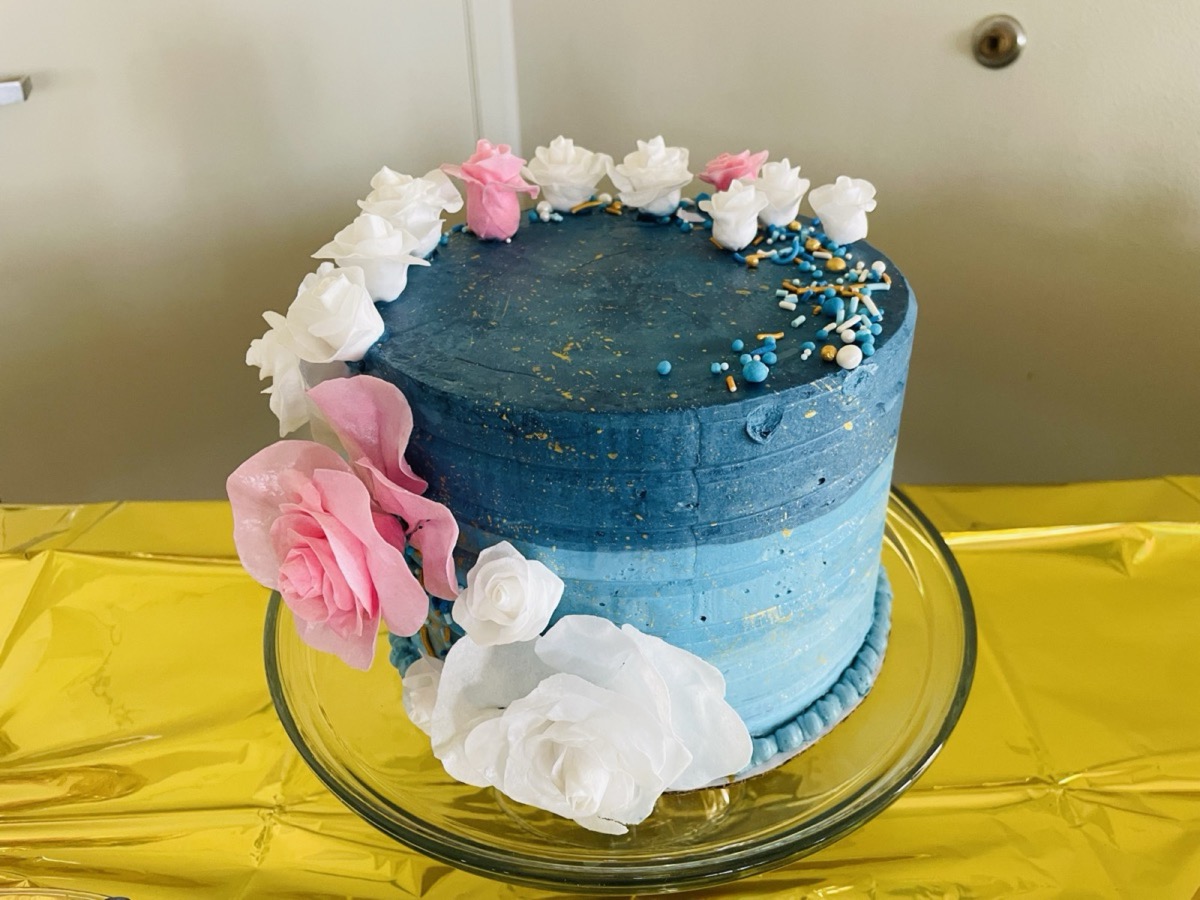

One thing I want to be clear about: these strategies helped, but they did not fix everything. I still had bad days, or weeks where I sent zero applications and felt guilty about it. The goal isn’t to optimize your way out of burnout, it’s to survive the season without losing yourself.
What I’d tell my past self
I’d tell her to stop checking email at 11:00 pm. Nothing good comes after 6:00 pm. That’s a different inbox.
I’d tell her the job search is not a referendum on her worth as a designer. It’s a numbers game running on broken infrastructure. ATS systems that filter you out for missing a keyword you didn’t know to include. Job postings that were never attached to real hires. Recruiters managing 40 requisitions who simply don’t have the capacity to reply. None of that is about you.
I’d tell her what Brooks says about the spiral career type. You will job search again, not because you failed, but because spirals turn every 7 to 12 years. The goal isn’t to never job search; it’s to do it without destroying yourself.
I’d tell her that the voice at 2am, the one that says you’re not good enough and never will be, is wrong. Not wrong in a “believe in yourself” poster way. Wrong in a literal, scientifically inaccurate way. Your brain processes social rejection as physical pain. It treats ambiguity as threat. After 200-plus rejections, it’s running on fumes and generating nonsense. Don’t trust the 2am narrator. That’s cortisol.
Month four of my job search, I hit a wall. I’m on the other side of it now. The 241 applications and 156 ghosts are a Sankey chart on my blog, not an open wound.
The search is a season. It is not your identity. It is not permanent. And whatever story your brain is telling you at 11pm while refreshing an empty inbox, that story is wrong.
Sources
- Eisenberger, N.I., Lieberman, M.D., & Williams, K.D. (2003). “Does Rejection Hurt? An fMRI Study of Social Exclusion.” Science, 302(5643), 290–292.
- Boss, P. (1999). Ambiguous Loss: Learning to Live with Unresolved Grief. Harvard University Press.
- Seligman, M.E.P. (1972). “Learned Helplessness.” Annual Review of Medicine, 23(1), 407–412.
- Maier, S.F. & Seligman, M.E.P. (2016). “Learned Helplessness at Fifty.” Psychological Review, 123(4), 349–367.
- Seligman, M.E.P. (1991). Learned Optimism. Knopf.
- Paul, K.I. & Moser, K. (2009). “Unemployment Impairs Mental Health.” Journal of Vocational Behavior, 74(3), 264–282.